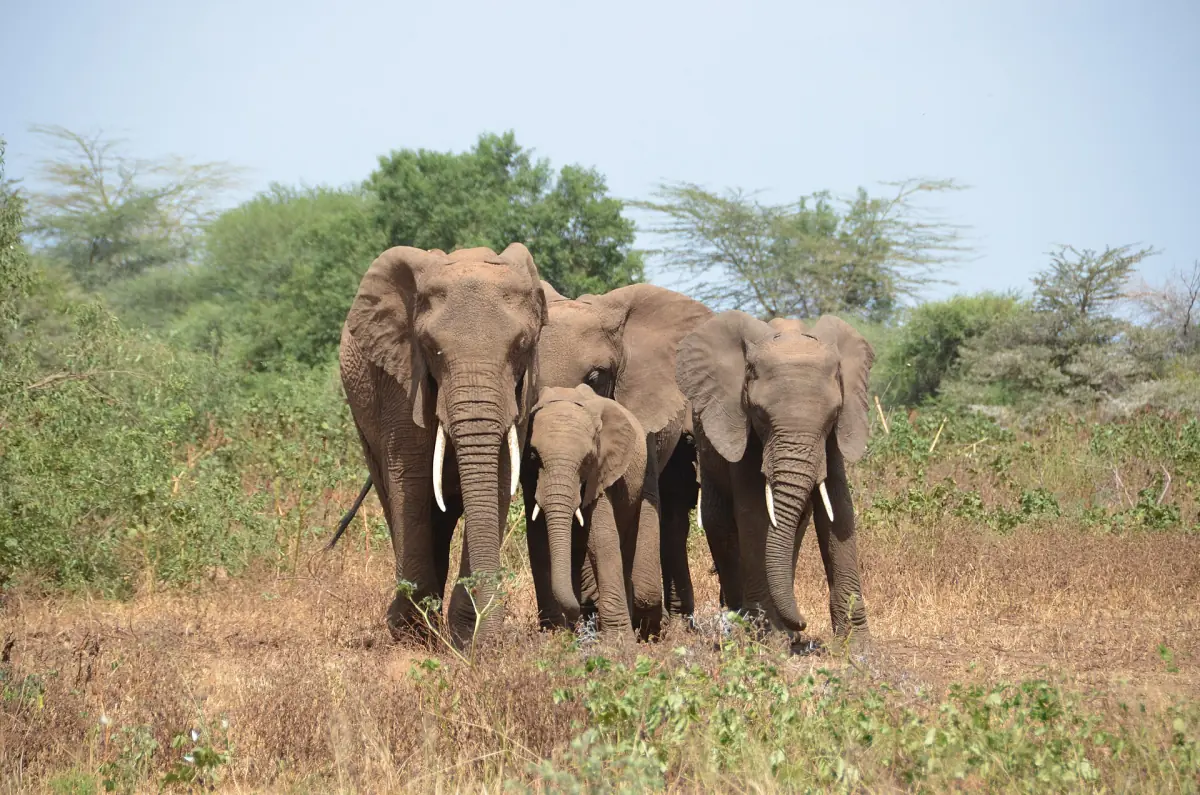
Lake Manyara animals at a glance
Lake Manyara National Park lies at the foot of the Rift Valley wall and covers 648.7 square kilometres, including the lake itself. That small area holds a lot of habitats, from dense groundwater forest near the entrance to open floodplain and the shore. The animals sort themselves along that line.
Elephants, buffalo, zebras, wildebeest and giraffes use the floodplains. Hippos live along the shore. Baboons, blue monkeys and bushbuck are found in the groundwater forest. These are species that live in the park, not counts. No guide can say what you will see on your day.
The easiest way to see them is a morning game drive in a vehicle. If you are still choosing a trip, start with the Lake Manyara safari page.
Our pick: three parks in three days
Lake Manyara, Tarangire and Ngorongoro in one camping trip let you compare how the wildlife differs from park to park.
Hand-picked tours, booked through Viator. Prices are indicative starting prices in US dollars (as of October 2026). Tap a tour for live availability and the current price in your currency.
Lake Manyara wildlife safaris
Guided game drives through the forest and along the lakeshore. Compare what each tour includes before you book.
Lake Manyara elephants
Large animals on forest tracks and open ground.
Elephants in the forest
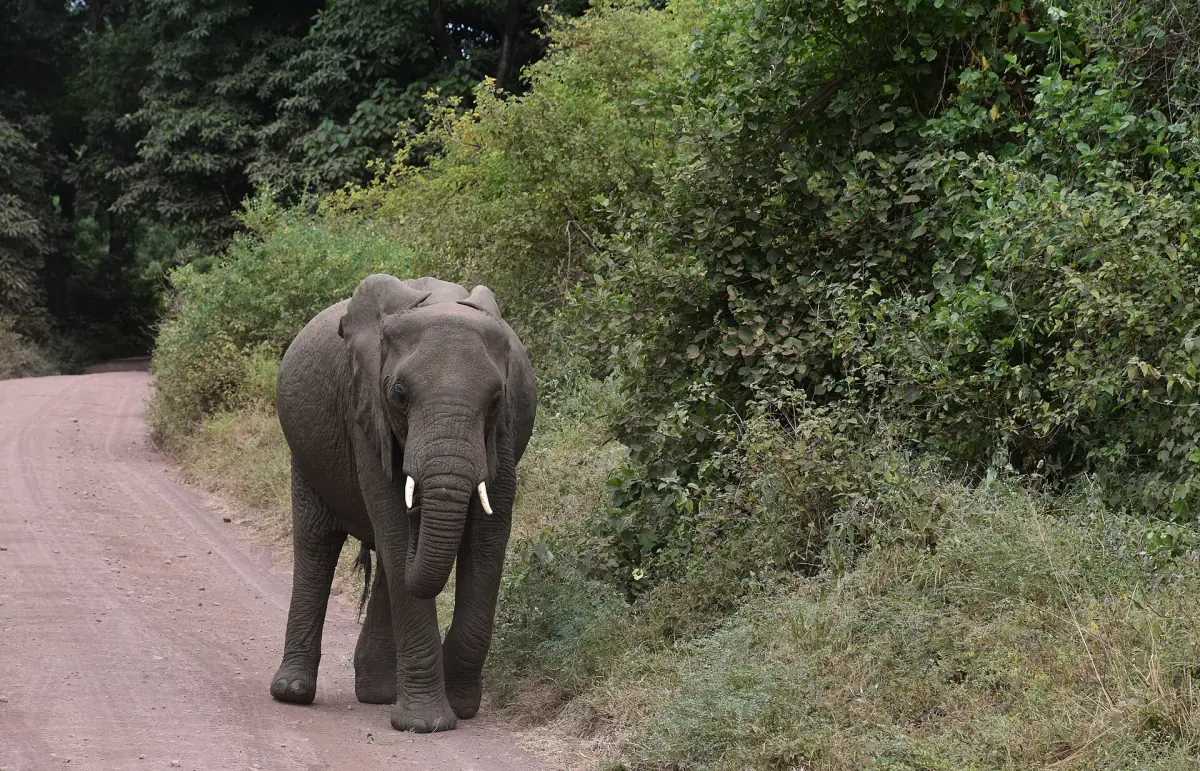
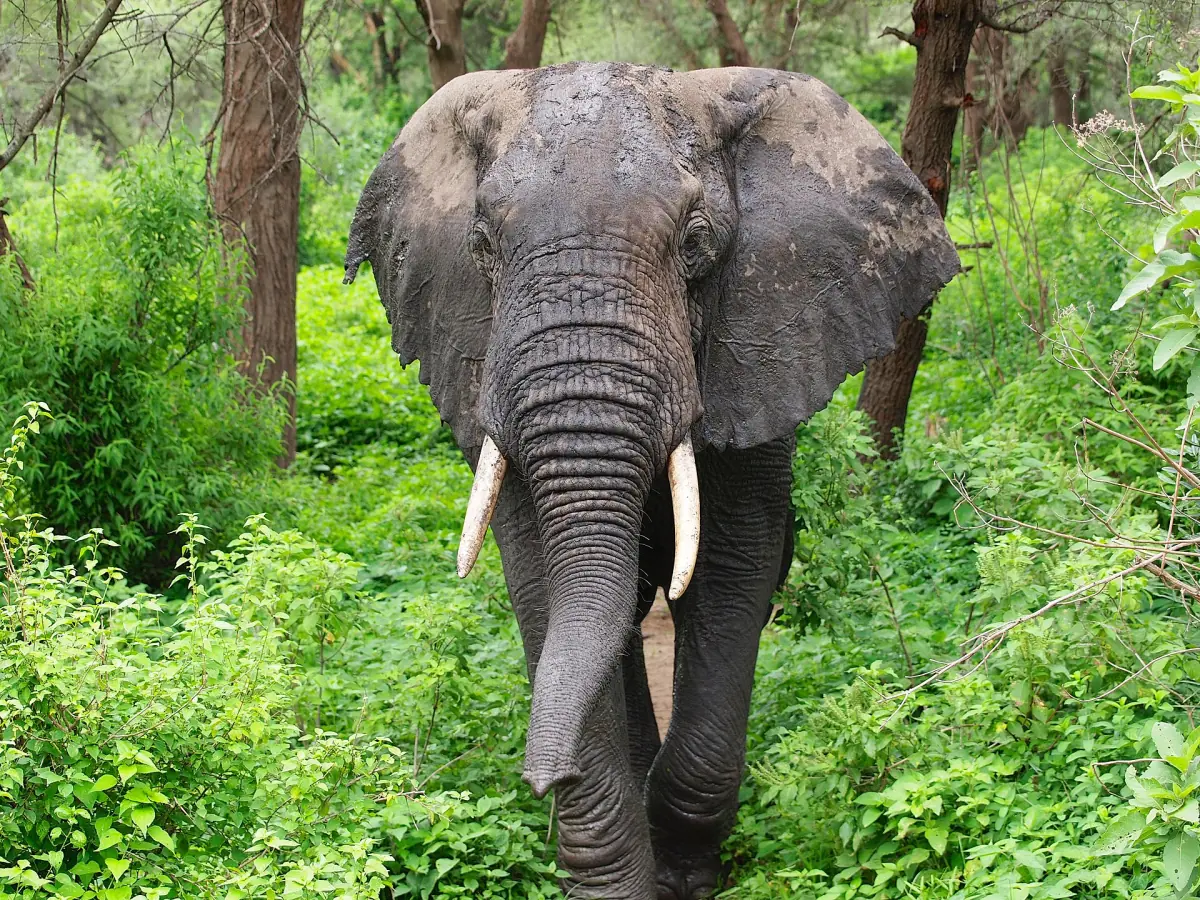
Elephants live in the park and walk between forest and floodplain. On forest tracks they can appear close to the vehicle. Stay quiet, keep the engine off if your guide says so, and do not get out.
Families and young animals
Groups with calves need space. Keep quiet and let the guide decide when to move on.
Bigger elephant country
For large elephant herds and baobab trees, Tarangire has the dedicated elephant guide.
Lake Manyara baboons and monkeys
The forest primates.
Baboon troops
Baboons are common along tracks in the forest, sometimes in large groups. They sit on rocks and cross the track, so slow down.
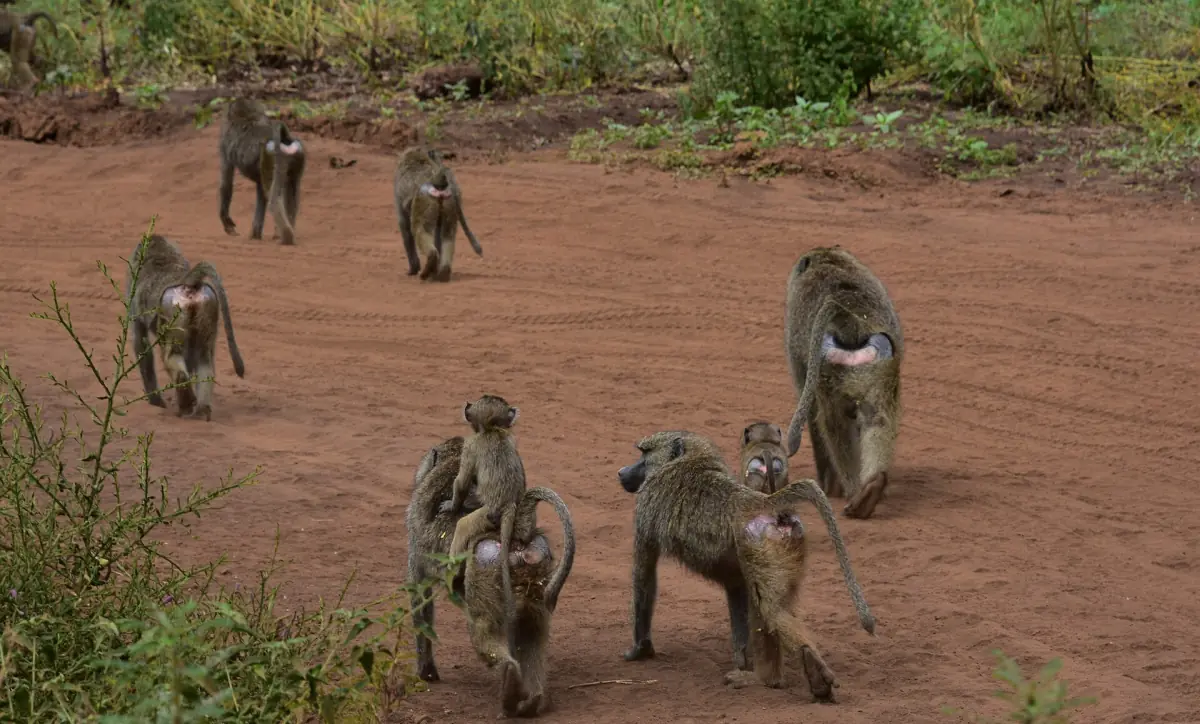
Blue monkeys and bushbuck
Blue monkeys and bushbuck live in the groundwater forest. They are shy, so look up and into the shade.
Do not feed
Do not feed baboons or monkeys, and keep food out of sight in the vehicle. Fed animals lose their fear and become a danger.
Hippos, buffalo and the plains animals
Water and grass.
Hippo pools and the shore
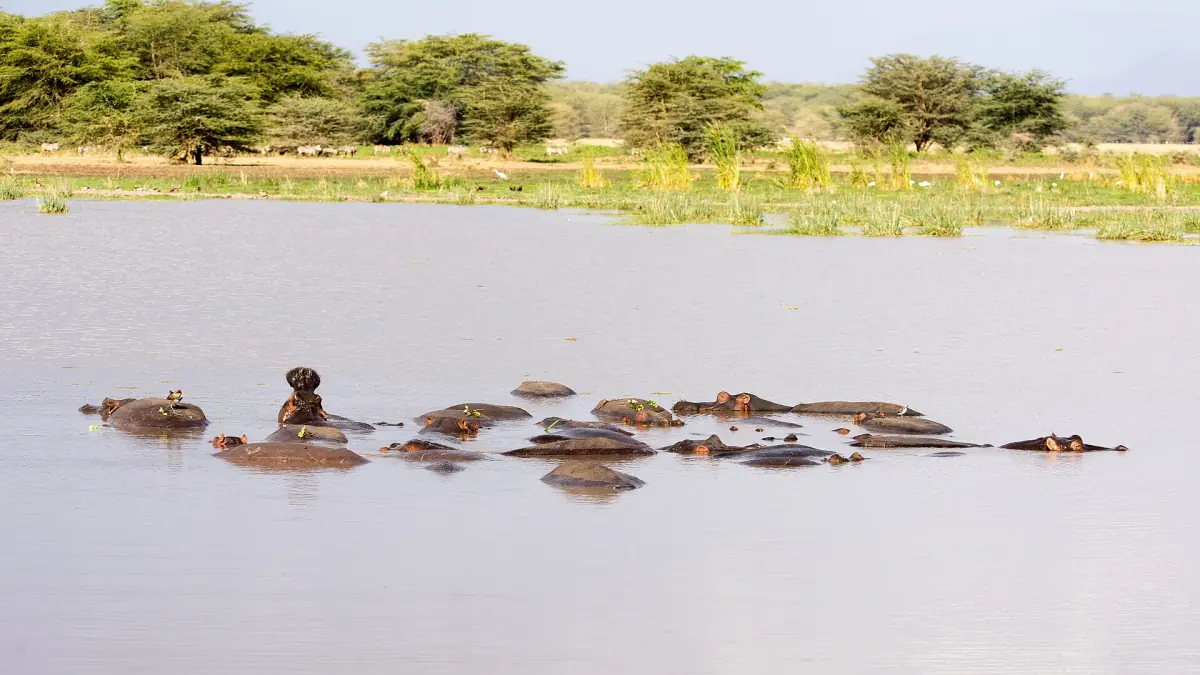
Hippo pools and wetlands are places to watch. Stay on the paths and platforms, keep a safe distance and never go near the water's edge on foot. Hippos can look calm and still be dangerous.
Giraffes and zebras
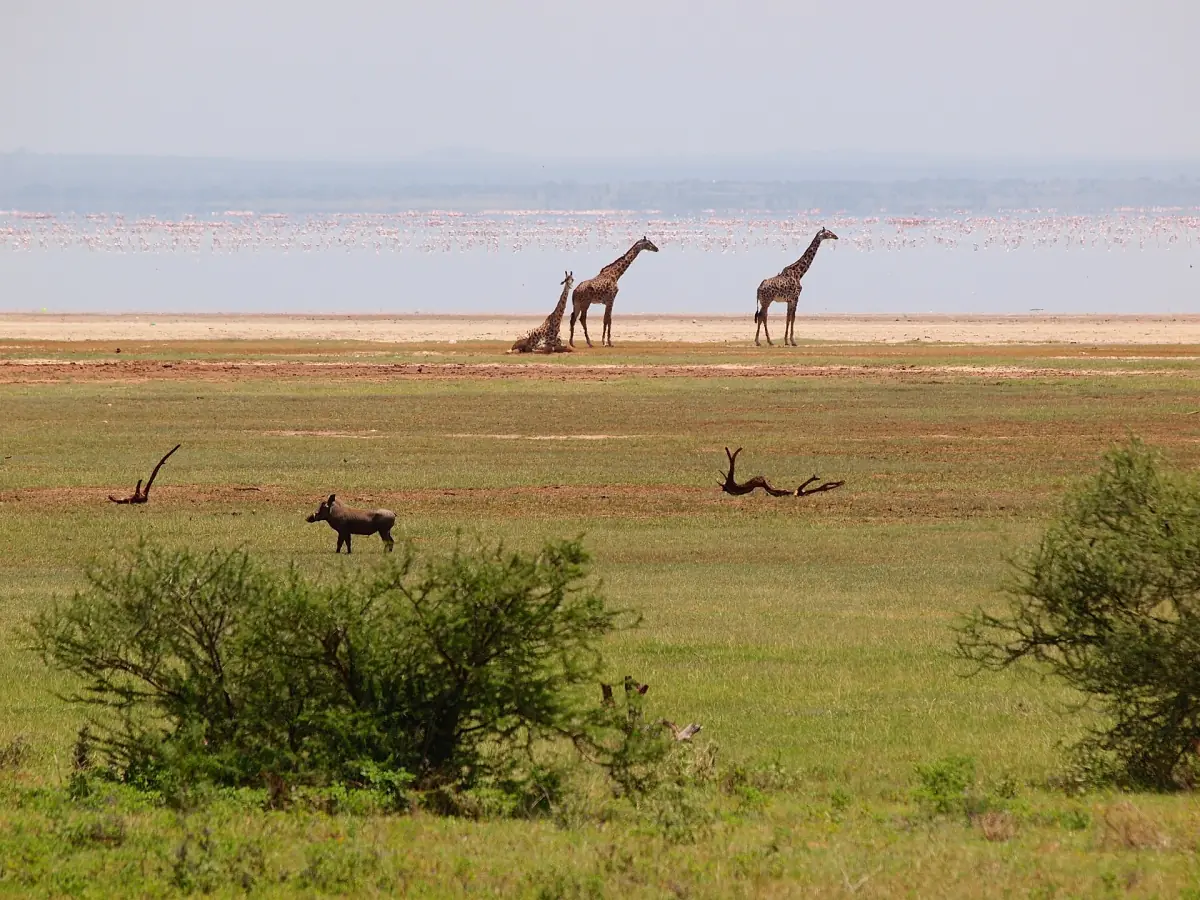
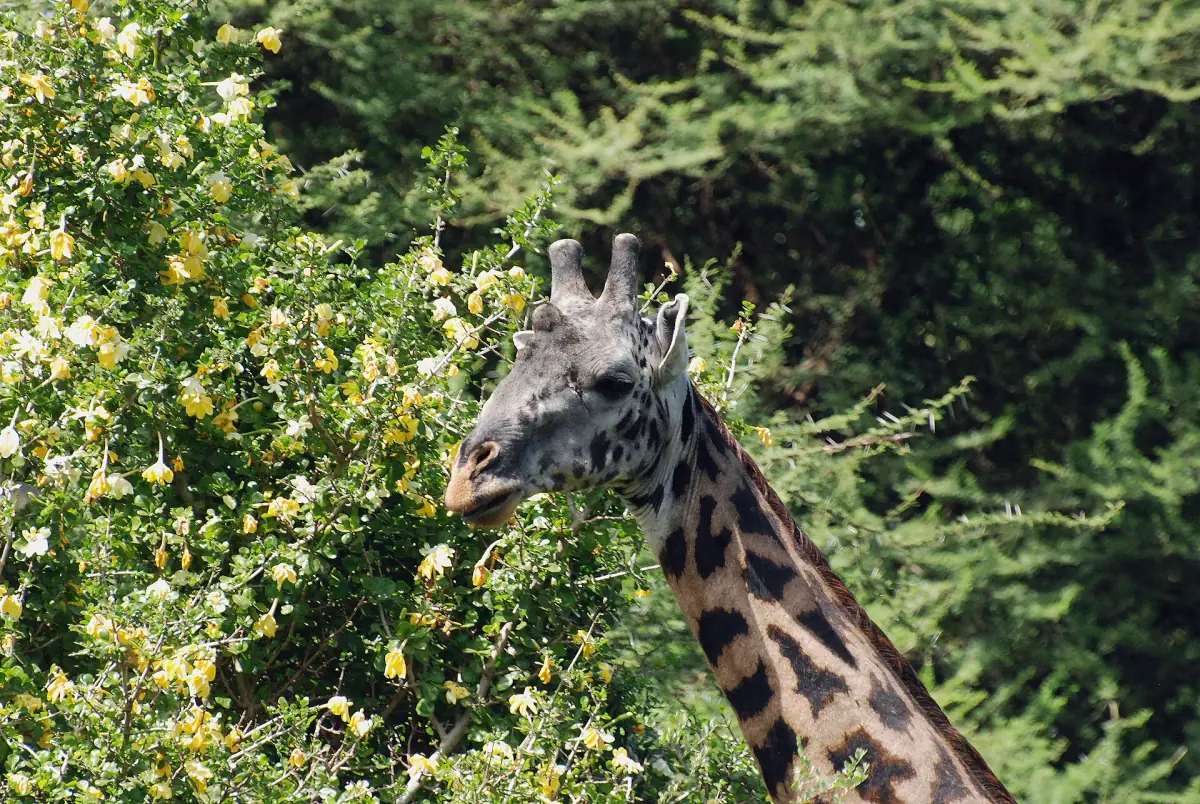
Giraffes feed in the acacia trees and walk the grass flats beside the lake. Zebras graze between the acacias, often near other grazers.
Buffalo and wildebeest
Buffalo stand in tall grass on the floodplain. Wildebeest also use the open ground. Give buffalo space.
| Animal | Where to look | Notes |
|---|---|---|
| Elephant | Forest and floodplain | Stay in the vehicle |
| Baboon | Forest tracks | Do not feed |
| Hippo | Pools and shore | Keep to paths and platforms |
| Giraffe | Acacia woodland and grass flats | Look at the treetops |
| Buffalo | Floodplain | Keep your distance |
| Zebra | Between acacias | Often near other grazers |
| Blue monkey | Groundwater forest | Shy, look into the shade |
For most visitors, one full morning drive that covers forest and shore gives a good mix.
Lions, birds and watching rules
The rest of the cast.
The tree-climbing lions are the park's best-known animals, but they are not a promise. Read the tree-climbing lions page for what is known. Birds, including flamingos and pelicans, have their own guide at Lake Manyara flamingos and birds.
Stay on the tracks
Stay on the paths and platforms. Do not disturb or feed any animal.
Keep a safe distance
Keep a safe distance and follow the guide's instructions on the spot.
Ask what the days showed
Your guide knows where animals were seen recently. Ask before you set off.
Lake Manyara animals: frequently asked questions
Which animals live in Lake Manyara National Park?
Elephants, buffalo, zebras, wildebeest and giraffes use the floodplains, hippos live along the shore, and baboons, blue monkeys and bushbuck are found in the groundwater forest. It is also known for its tree-climbing lions.
Will I see elephants?
Elephants live in the park, but a sighting cannot be promised on any day. A morning drive through forest and floodplain gives good chances.
Are baboons dangerous?
Baboons are wild animals. Keep food out of sight, follow your guide's instructions, and never feed them.
Where can I see hippos?
At the hippo pools and the wetlands. Stay on the paths and platforms and keep a safe distance.
How many animals are in the park?
Numbers change from year to year, so treat any exact figure with care. Your guide can tell you what has been seen lately.
Can I leave the vehicle?
Not on a normal game drive. Walking safaris need arrangements with the park and a ranger. See the activities page.